The Victorian Social Housing Regulation Review Final Report was a critical moment for both public and community housing providers.
Its findings confirmed what many in the sector had long understood. A significant proportion of social housing properties are in poor condition, largely driven by low tenant turnover and long-term underinvestment in planned maintenance. More importantly, the Review clearly signalled a tightening of minimum standards and stronger regulatory enforcement.
This shift was not simply a policy update. It represented a fundamental change in how asset condition, safety and compliance would be measured, monitored and acted upon. Providers now operate in an environment where compliance is increasingly visible, tenant expectations continue to rise and regulatory scrutiny is intensifying.
At the same time, organisations are managing this responsibility within tightly constrained financial settings. Rental income is regulated, construction and trade costs continue to escalate and capital budgets are under constant pressure. This creates a growing tension between what is required from a safety and compliance perspective and what is traditionally achievable through reactive maintenance models.
The Implications of Responsive Maintenance
For many years, trade delivery across the sector has been built around response rather than prediction. Callouts are triggered by failure. Compliance is often managed across multiple contractors, platforms and spreadsheets. Data is fragmented, reporting is manual and true forecasting remains difficult. While these models have sustained the sector to date, they are becoming increasingly exposed under today’s regulatory and financial conditions.
The reality is that properties with long-term tenancies rarely benefit from natural upgrade cycles. Services age in place. Small defects compound into larger failures. Emergency works become more frequent and costly. Over time, what appears to be cost control through deferral quietly becomes a buildup of operational and compliance risk. The Regulation Review makes it clear that this risk is unacceptable and will no longer go unchecked.
The Shift to Predictable Subscription Maintenance Models
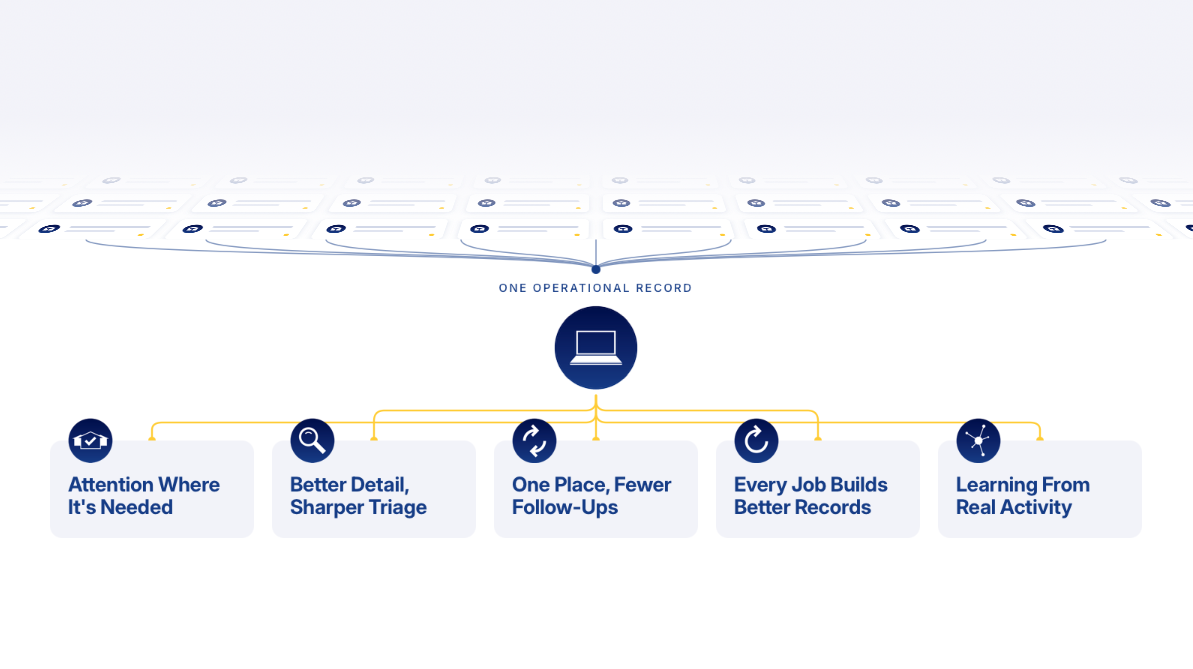
We are now seeing a shift from reactive spend to structured, predictable compliance and maintenance programs. Leading providers are already moving in this direction. They are consolidating trade services into unified delivery models. They are converting unpredictable repair costs into forecastable operating expenditure. They are centralising asset registers, compliance cycles and reporting into single accountable systems. Most importantly, they are removing duplication, reducing administrative workload and improving visibility across their entire portfolios.
This approach is about strengthening financial control, protecting long-term capital programs and creating stability across operational budgets. When trade and compliance delivery are engineered correctly, the outcome is lower lifecycle maintenance costs, reduced emergency intervention, stronger tenant satisfaction and a far more sustainable operating platform.
When trade and compliance delivery are engineered correctly, the outcome is lower lifecycle maintenance costs, reduced emergency intervention, stronger tenant satisfaction and a far more sustainable operating platform.
This industry reset should be seen as a commercial opportunity. It provides a clear prompt for housing providers to reassess how trade services and compliance are delivered across their organisations. It invites a practical review of how many contractors are being managed, how much duplication exists, how predictable annual costs truly are and whether current systems genuinely support proactive asset management.
The sector is now entering a new era of accountability. Underinvestment is no longer a hidden issue. Deferred maintenance is no longer invisible. Fragmented trade delivery is not sustainable. Providers are being challenged to demonstrate that safety, compliance and maintenance can be delivered at scale, efficiently and on a permanent basis.
Those who are embracing this change early are seeing the benefits. They have positioned themselves as modern, resilient operators capable of delivering better outcomes for tenants, staff, regulators and funding partners alike.