At a Glance
Victoria's next rental law change begins on 13 October 2026 with new safety-check and record-keeping requirements. New rental energy-efficiency standards then begin progressively from March 2027, with different requirements applying at different times.
For Property Managers, the simplest approach is to think about three triggers rather than six separate standards: system failure, tenancy change and universal deadlines.
A new rental agreement in 2027 could trigger several requirements at the same property simultaneously.
Ceiling insulation and draughtproofing have additional safety requirements that may need to be completed before works can proceed.
Knowing what is already installed across a portfolio will make the transition significantly easier to manage.
Victoria’s new rental energy-efficiency standards are relatively straightforward when viewed one property at a time. Across an entire rent roll, the challenge is keeping track of different commencement dates, triggers, property conditions, safety prerequisites and record-keeping obligations as they apply to different properties at different times.
One way to simplify that is to focus on the three main trigger points:
a system that fails beyond repair
a change in rental agreement
a universal deadline
— and know which requirements follow each one.
What Rental Law Changes Come Into Effect In Victoria From 13 October 2026?
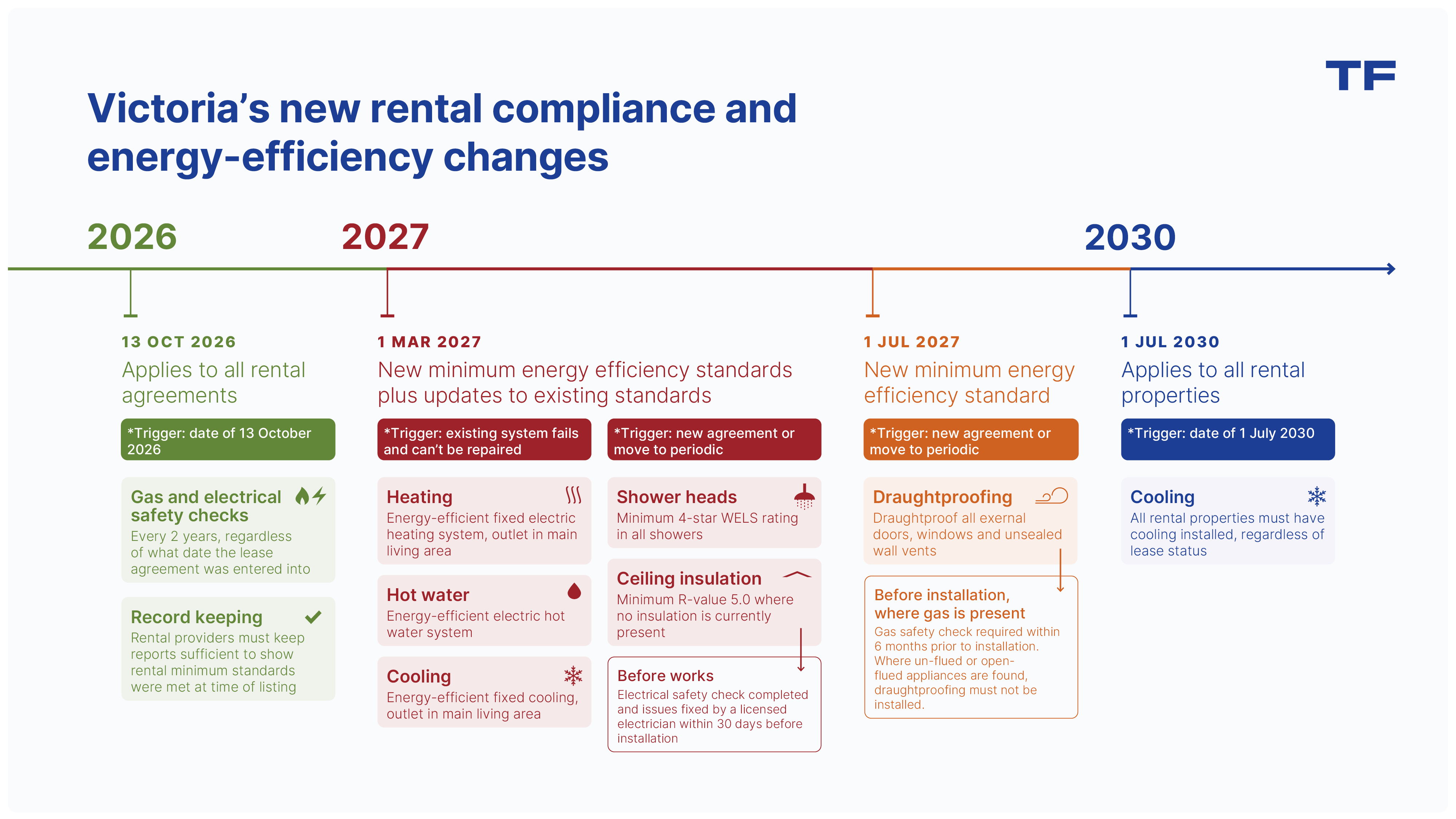
Ahead of the energy-efficiency standards, there are two changes which take effect on 13 October 2026.
Rental providers must arrange gas and electrical safety checks every two years for all rental properties, removing the previous exemption for properties with leases entered into prior to 29 March 2021.
Rental providers must keep sufficient records to show that a property complied with the rental minimum standards at the time it was advertised or offered for rent. Consumer Affairs Victoria may publish further guidance about what records will be sufficient to demonstrate this.
Why Are Victoria's Rental Energy-Efficiency Standards Being Introduced?

Victoria's existing rental minimum standards already set requirements for areas including heating, insulation and energy-efficient showerheads. The new standards extend those requirements as part of the Victorian Government's broader effort to improve the energy efficiency of rental homes.
The reforms are intended to make rental properties cheaper to heat and cool, improve thermal comfort and reduce household energy use. They also support Victoria's broader transition away from residential gas by requiring efficient electric alternatives when certain gas heating and hot-water systems reach the end of their usable life.
Importantly, the reforms are not designed to require every rental property to be upgraded at once. Instead, most of the new requirements take effect when particular events occur, such as an appliance failing beyond repair or a new rental agreement beginning. This allows improvements to be introduced progressively as properties, appliances and tenancies change.
What Is Changing Under Victoria's Rental Minimum Standards?
Not every requirement taking effect from 2027 is entirely new. Some strengthen minimum standards Victorian rental properties are already required to meet, while others introduce new minimum energy-efficiency standards.
Existing Minimum Standards Being Strengthened
Heating
Rental properties are already required to have a fixed heater in the main living area. From 1 March 2027, when an existing fixed heater fails beyond repair, its replacement will need to meet the new energy-efficiency requirements.
Exemptions: LPG powered space heaters, wood heaters and hydronic heat pumps, situations where it would be unreasonably expensive to install an energy-efficient electric system or where heritage or owners corporations rules prohibit it.
Showerheads
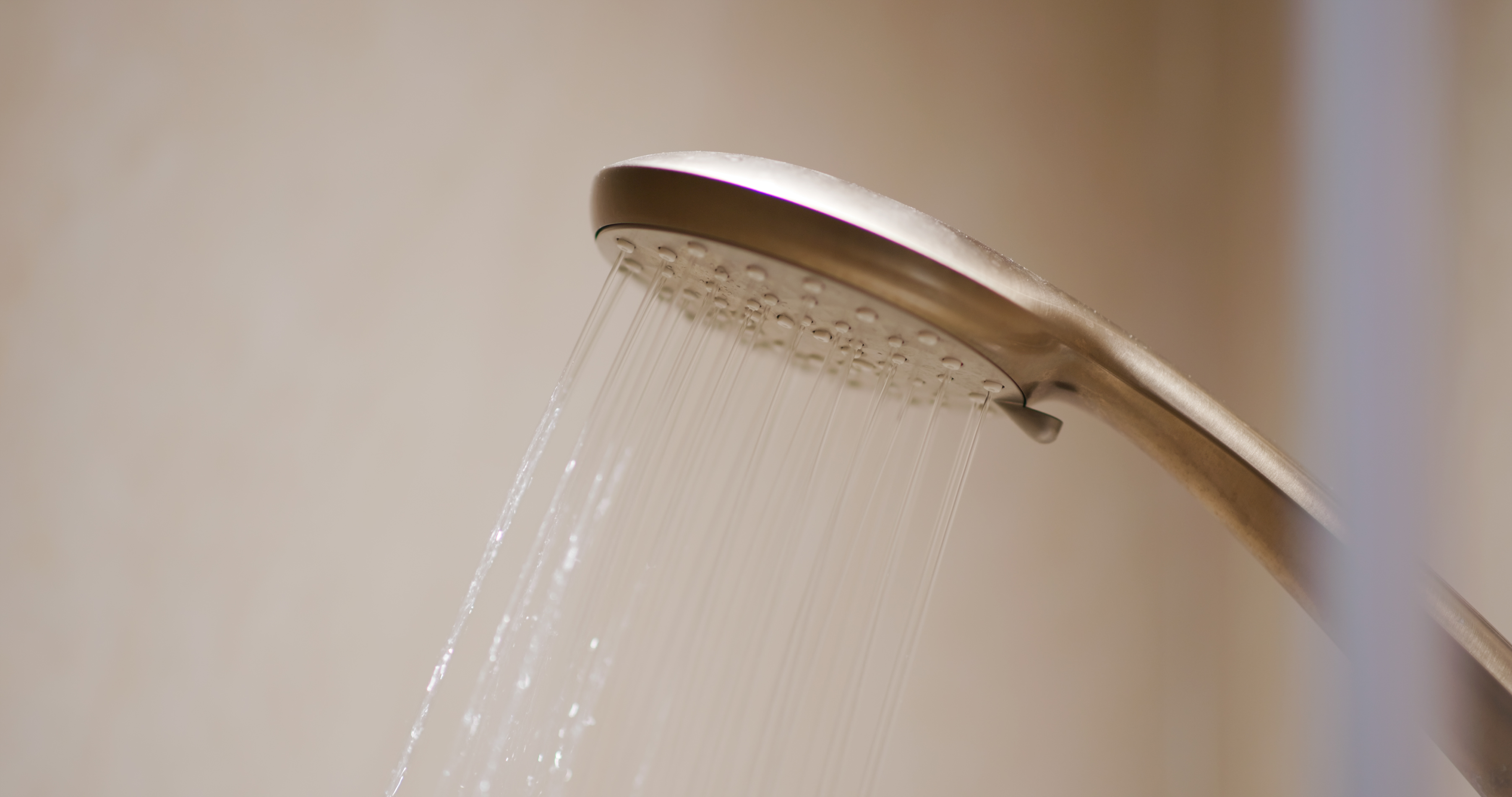
Existing rental minimum standards already require showerheads to meet water-efficiency requirements. From 1 March 2027, a new rental agreement or conversion to periodic will trigger the higher requirement for 4-star WELS-rated showerheads.
Exemptions: if a 4-star WELS-rated showerhead cannot be installed or would not operate effectively due to the property’s plumbing structure eg gravity-fed systems that require a higher flow rate to activate.
New Energy-Efficiency Minimum Standards Being Introduced
Cooling
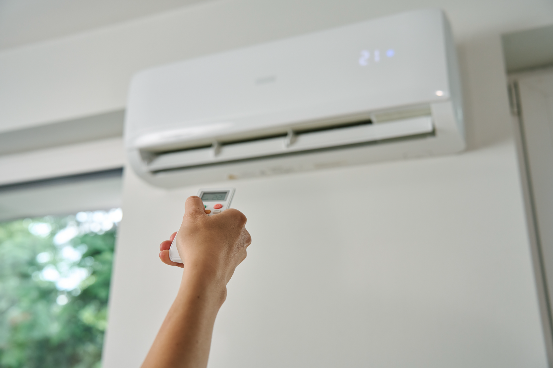
From 1 March 2027, a new rental agreement or conversion to periodic triggers the requirement for efficient fixed cooling in the main living area. Where fixed cooling already exists and fails beyond repair, its replacement must also meet the new standard. From 1 July 2030, the cooling standard applies to all rental properties.
Exemptions: Where replacement would be unreasonably expensive or prohibited by heritage or owners corporation rules. Note: Existing ducted evaporative coolers with an outlet in the main living area will meet the standards, and existing fixed cooling systems including window air conditioners, room evaporative coolers and ducted or non-ducted reverse cycle air conditioners may satisfy the requirement for the property to have fixed cooling.
Hot water
From 1 March 2027, when an existing hot-water system fails beyond repair, its replacement must meet the new energy-efficiency standard: an energy-efficient electric heat-pump water heater or electric-boosted solar water heater supplying hot water to the kitchen, laundry and bathroom.
Exemptions: Certain LPG systems, centralised systems and warranty replacements.
Ceiling insulation
From 1 March 2027, a new rental agreement or move to periodic triggers a requirement to install R5.0 insulation in ceiling spaces where no insulation is currently present.
Exemptions: Where installation is unreasonable or unsafe. Note: Existing insulation already installed doesn’t need to be replaced. An electrical safety check is required within 30days before installation (see Pre-Work Safety Requirements section below).
Draughtproofing
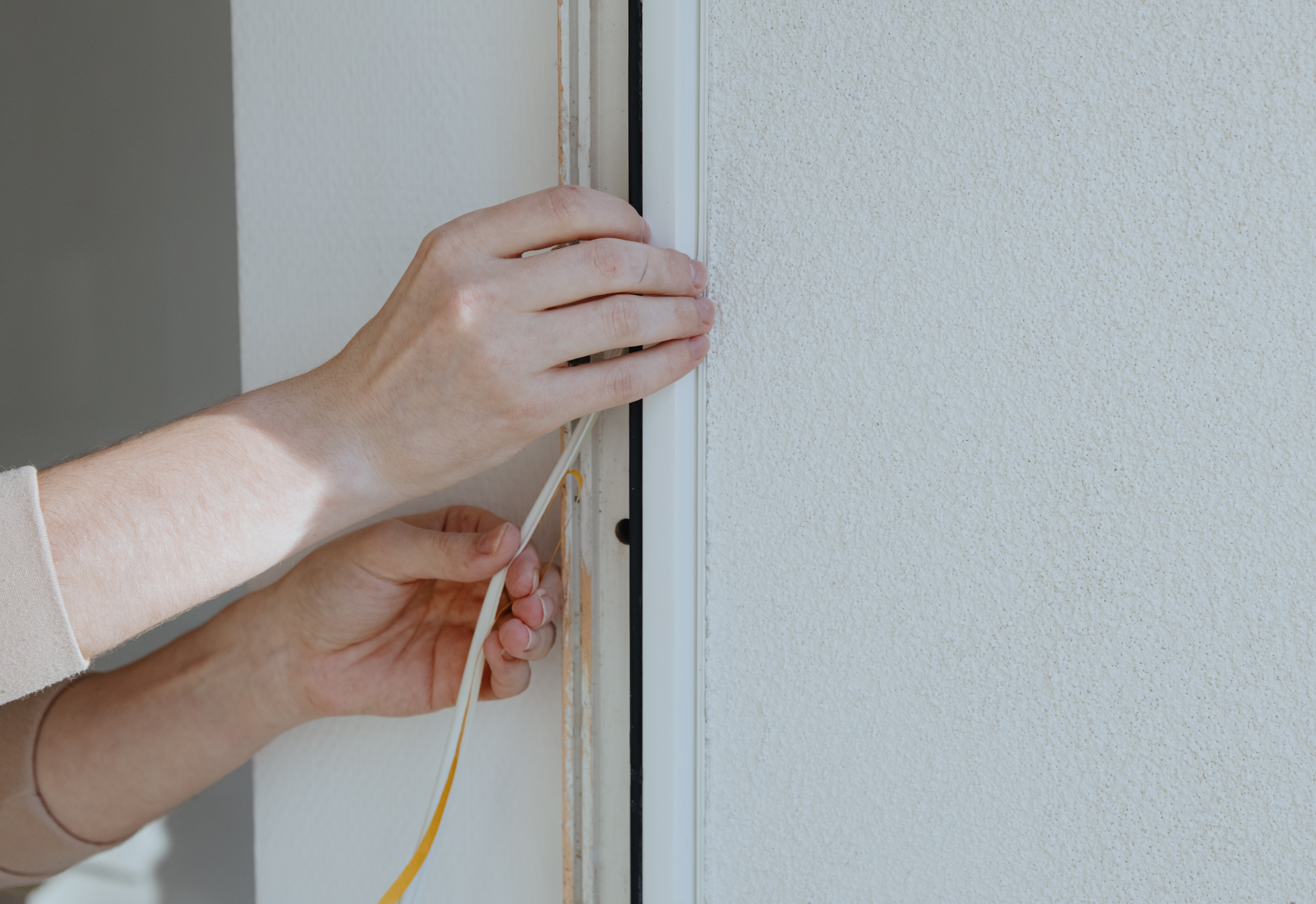
From 1 July 2027, a new rental agreement or move to periodic triggers requirements to draughtproof all external doors and windows and unsealed wall vents.
Exemptions: Where a flueless space heater or open-flued gas appliance is installed, or where draughtproofing is unreasonable or not permitted under heritage laws or owners corporation rules. Note: Where a property has gas, a gas safety check is required 6 months prior to installation (see Pre-Work Safety Requirements section below).
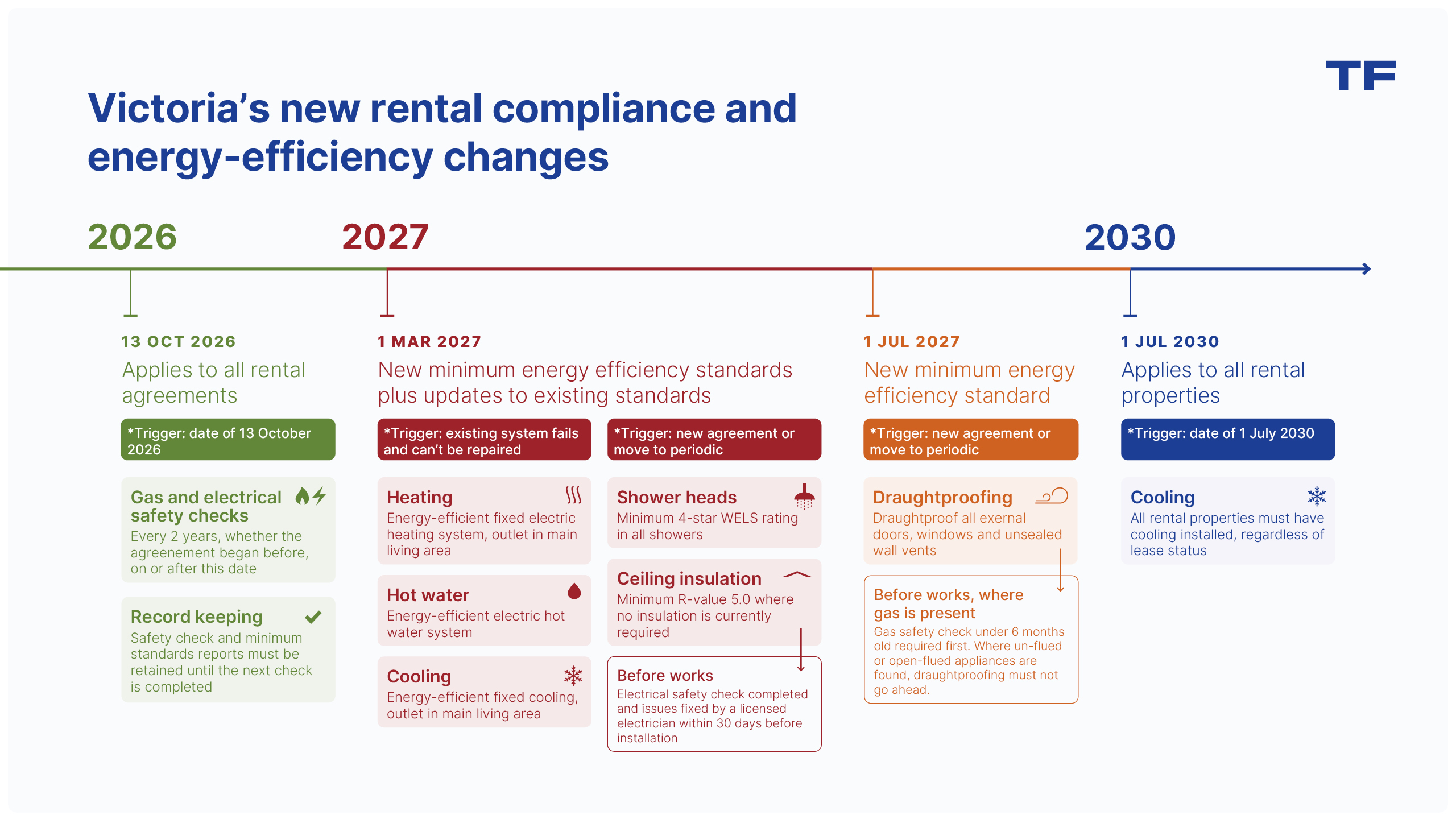
Three events trigger Victoria's new rental laws and energy-efficiency minimum standards: system failure, a new lease or periodic agreement, and the universal 1 July 2030 deadline.
Three Key Triggers for Minimum Standards
There are three key events that trigger action for property managers.
Trigger 1: A Heating, Hot-Water or Existing Cooling System Fails Beyond Repair
Rental providers aren't required to replace functioning systems simply because the new standards have commenced, only when replacement becomes necessary.
From 1 March 2027, the replacement system will need to meet the applicable energy-efficiency requirements.
Trigger 2: A New Rental Agreement Begins or Moves to Periodic
This is potentially the most significant trigger to manage across a rent roll because one tenancy event can bring several standards into play at the same property.
From 1 March 2027, a new rental agreement or conversion from a fixed-term to periodic agreement can trigger requirements for:
Cooling
Ceiling insulation
4-star WELS-rated showerheads
And from 1 July 2027, draughtproofing joins that list.
That means a routine tenancy event may need to prompt a broader check of the property's energy-efficiency requirements.
Trigger 3: 1 July 2030 Arrives
From 1 July 2030, all Victorian rental properties must meet the cooling standard, regardless of when the rental agreement began.
For portfolio managers, this creates a clear long-term deadline. Properties that haven't already been brought within the cooling requirements through a new or periodic rental agreement will need to meet the standard by that date.
Pre-Work Safety Requirements
Triggers tell a property manager when a standard comes into play, but insulation and draughtproofing have an additional step to consider before the upgrade itself can proceed. These additional safety-check requirements can add lead time, so they need to be factored into planning and scheduling.
30 Days Before Ceiling Insulation: Check Electrical Safety

An electrical safety checklist must be completed, and any identified electrical issues addressed by a licensed electrician, within the 30 days before insulation is installed.
Within 6 Months Before Draughtproofing Installed: Check Gas Safety

Draughtproofing has a similar dependency where gas appliances are present.
A gas safety check must have been completed less than six months before the draughtproofing work is completed.
Note: If an open-flued or flueless gas appliance is identified during that check, the draughtproofing cannot proceed. CAV's guidance does not say that this requirement itself obliges the rental provider to replace the gas appliance; rather, it prevents the property from being sealed while that type of appliance is present.
What Can Property Managers Do Before March 2027?
Victoria's new minimum energy-efficiency standards introduce a significant new layer of responsibility for rental property management. But with reliable property-level information and clear trigger points, the new standards become a series of predictable decisions made at the right time.
A useful starting point is to establish what is already known about each property. Property managers don't need to assess the technical requirements themselves. A Taskforce Rental Minimum Standards (RMS) check reports on all minimum standards across current and incoming regulations, giving property managers a property-level picture of where attention may be required.
Importantly, an RMS check can be completed now, regardless of whether the property is likely to trigger the new standards in the short term. Identifying potential requirements early gives property managers and rental providers more time to plan for upgrades, replacements or any pre-work safety requirements that may be needed.
Don't assume every property needs an upgrade on 1 March 2027 — the objective is to know enough about each property that, when a trigger occurs, the next steps are already clear.
Rental Minimum Standards Training

Our Rental Minimum Standards specialists can provide online or in-person training for Property Managers and teams.
The sessions cover the upcoming requirements in practical, easy-to-understand terms and give your team the opportunity to ask questions, work through examples and get clarification on the standards.
Contact us to arrange a Rental Minimum Standards training session for your team.
Talk to our team
If you have questions about how our services may support you or would like to speak to someone about the challenges you're facing to meet requirements across your portfolio, contact our team using the form below. We'd love to hear from you.
Contact UsFrequently Asked Questions
The new standards begin to take effect from 1 March 2027, with different requirements applying at different times and in response to different triggers. Draughtproofing requirements begin from 1 July 2027, while the cooling standard becomes mandatory for all Victorian rental properties from 1 July 2030.